From Depression to Laughter Yoga and Social Prescribing

By Sunny Turner
From Depression to Laughter Yoga and Social Prescribing
I came to laughter yoga and social prescribing through depression. Here’s what I found.
There was a time when the idea of me leading a room full of people in spontaneous laughter would have seemed completely absurd. Not because I’m not a sociable person, but because I was struggling. Really struggling.
I experienced depression, and like a lot of people who go through it, I felt disconnected. From myself, from other people, from anything that might be described as joy. I was incredibly lonely and tried various things to cheer me up, the way you do. Purchasing material items, joining a pilates class, swimming, and a choir. Some helped a little. Some didn’t. But nothing really shifted things in the way I was hoping.
Then, in March 2016, I went along to a Laughter workshop run by local Manchester comedian, Kerry Leigh. I didn’t know what to expect. I was probably a bit sceptical, if I’m honest. Laughing as a form of well-being? It sounded a little far-fetched. Honestly, I was expecting jokes from a comedian.
But something happened in that room. Not a dramatic transformation – just a genuine, quiet shift. I laughed. Not because anything was particularly funny. I laughed because we were all laughing together, moving, breathing, connecting. And it felt good. Really good.
I went on to learn all the benefits of laughter and trained with Lotte Mikkelsen, a Laughter Yoga Master Trainer. Eventually founding Serious Laughter at the end of 2016. Since then, I’ve had the privilege of working with thousands of people – in corporate teams, schools, NHS organisations, and community groups – helping them find that same unexpected release.
What is Social Prescribing – and How Do Non-Clinical Referrals Work?
I’ve been involved with the social prescribing world for a few years now, and the more I learn about it, the more I feel that Laughter Yoga belongs right at its heart.
For anyone not familiar with the term, social prescribing is an approach that enables GPs, social prescribing link workers, and other health professionals to connect people to community resources and wellbeing support, rather than or alongside clinical treatment. These non-clinical referrals might lead someone to a gardening group, an art class, a walking club, or, yes, a laughter session. A link worker acts as a community connector, helping people find the right local services for their needs.
The National Academy for Social Prescribing has published compelling evidence showing just how effective this approach can be. Since it was included in the NHS Long Term Plan in 2019, over 5.5 million GP referrals have been made to community services. For every £1 spent on link worker salaries, the NHS saves an estimated £4. In some areas, GP appointments fell by over 40% for people referred to these programmes.
Those are significant numbers. But what they represent, in human terms, is people finding wellbeing through community connections – support outside a clinical setting that genuinely makes a difference to how people feel day to day.
Why Laughter Yoga Works as a Wellbeing Support Activity
When I was going through depression, the only suggestion given by my therapist was mindfulness as a non-clinical activity as part of my care. Well-being laughter wasn’t on the radar in the same way. I’m not saying it would have fixed everything – depression is complex, and everyone’s experience is different. But I do think that having access to something like this earlier on could have made a real difference in managing my anxiety and low mood.
Here’s what I know from experience: laughter yoga lowers the barriers to connection.
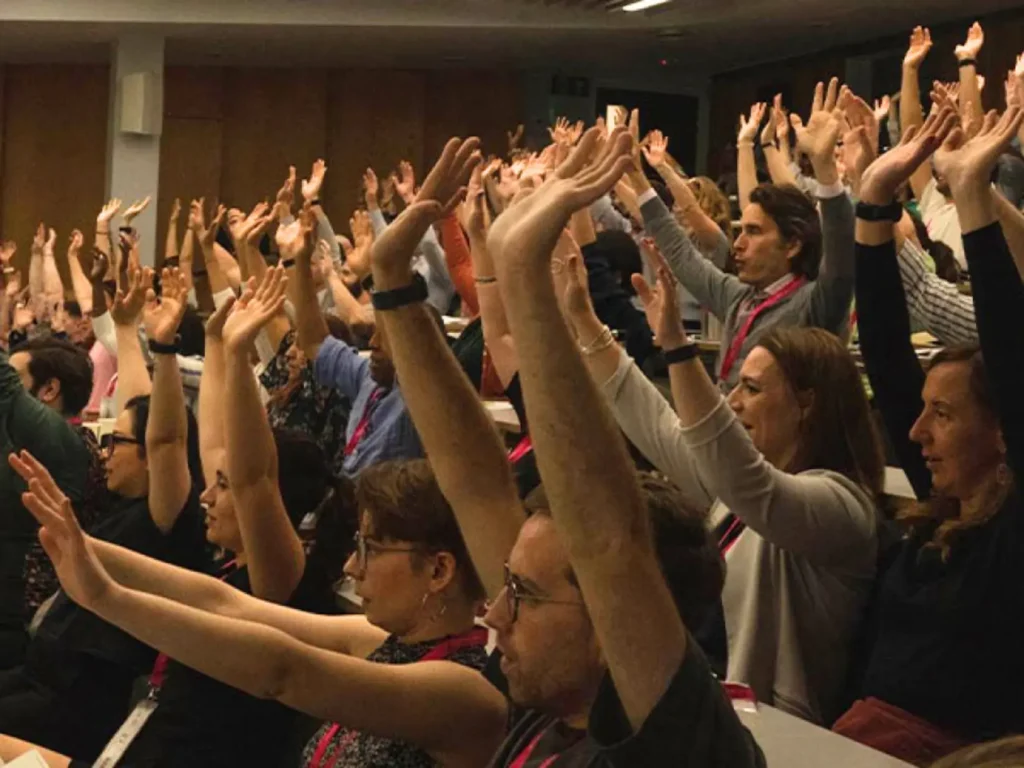
You don’t need to be happy to take part. You don’t need to find anything funny. The sessions use simulated laughter exercises – playful, gentle, and done as a group – which naturally create the conditions for real laughter and genuine connection to emerge. It is accessible, low-cost local wellbeing support that meets people where they are.
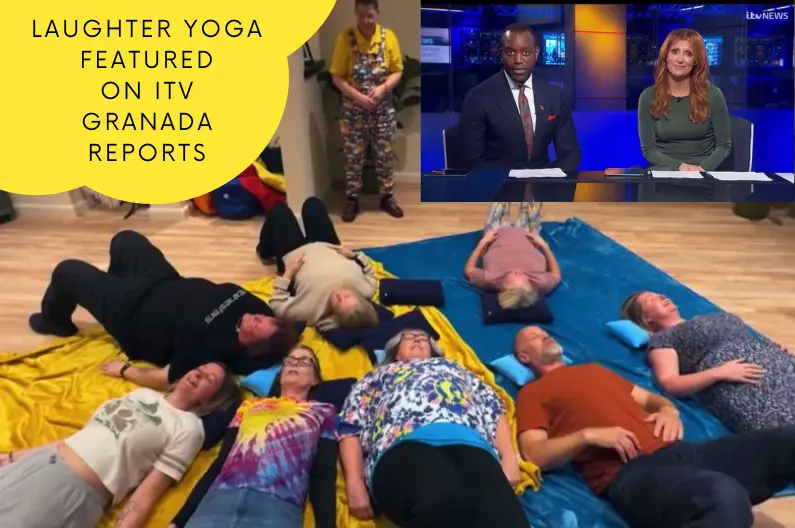
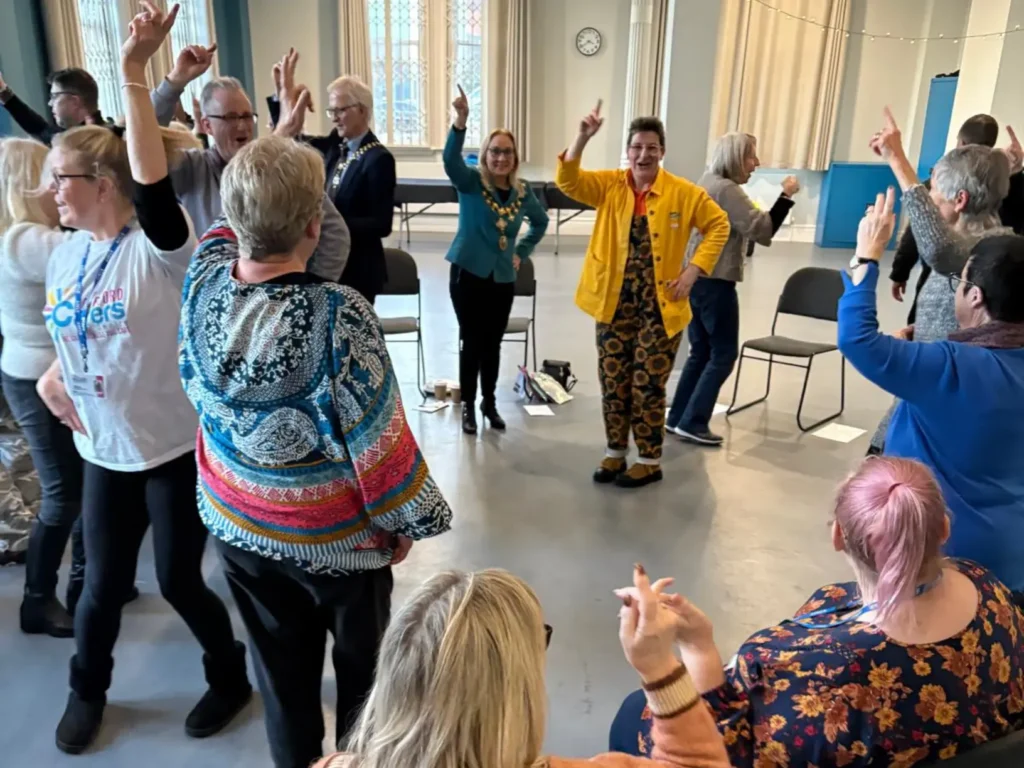
I’ve seen people walk into sessions looking guarded, arms folded, deeply unconvinced. And I’ve seen those same people leave looking lighter. Not because I’ve performed a miracle – but because laughter in a group setting does something to us that’s hard to put into words. It reminds us we’re human. It interrupts the noise. It creates a moment of shared warmth that some people haven’t felt in a very long time. That is community mental health support in its simplest, most human form. Read about the social impact of a Laughter Club in Manchester featured on ITV Granada Reports.
How Loneliness Affects Mental and Physical Health – and What It Costs the NHS
Loneliness is often dismissed as a feelings issue rather than a health issue. The research tells a different story.
When someone is chronically lonely, the effects show up in the body as well as the mind. Loneliness is linked to higher rates of depression, anxiety, heart disease, high blood pressure, weakened immune function, and faster cognitive decline. The World Health Organisation recognises it as a priority public health problem – and the evidence increasingly backs that up.
Part of the reason is mental health. Lonely people are more likely to visit their GP, be referred to mental health services, and be prescribed antidepressants. Without the protective buffer of genuine social connection, symptoms tend to persist or worsen – meaning longer, more costly treatment.
But the physical health impact is just as significant and often less discussed. Social connection naturally encourages healthier habits – movement, routine, purpose. Without it, people are more likely to be physically inactive, to smoke, to drink more, and to eat poorly. Not out of weakness, but because community tends to hold us to ourselves in ways we don’t always notice until it is gone.
The NHS is largely set up to treat problems once they occur. Loneliness quietly drives people towards crisis – a mental health breakdown, a hospital admission, a condition that could have been managed earlier with the right support. By that point, the cost is high. A University of Exeter study published in 2025 found that people who are often lonely incur around £850 more in annual NHS costs than those who are not lonely, across GP visits, outpatient appointments, and hospital admissions.
What Laughter Yoga offers is something the NHS cannot easily prescribe: regular, accessible, low-cost human connection. The kind that happens before someone reaches a crisis point. That is preventive healthcare – and it is exactly where social prescribing has the potential to make a lasting difference.
My Mission – Laughter Yoga as Local Wellbeing Support Near You
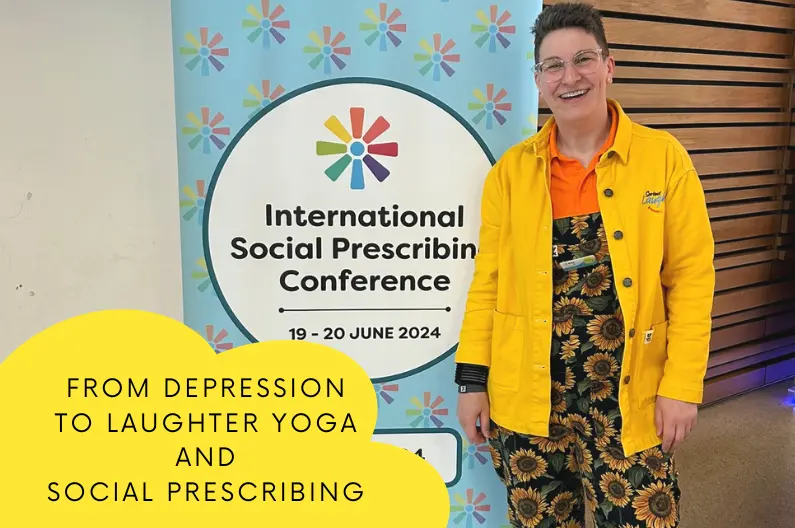
I’m now a certified Comedy on Prescription Facilitator, working alongside the Craic Health collective and connecting with health professionals who share this vision. I’ve had the privilege of speaking at International Social Prescribing Conferences and have met incredible people working hard to shift how we think about health and community.
But I want to be specific about what I’m aiming for – because vague ambitions don’t change things.
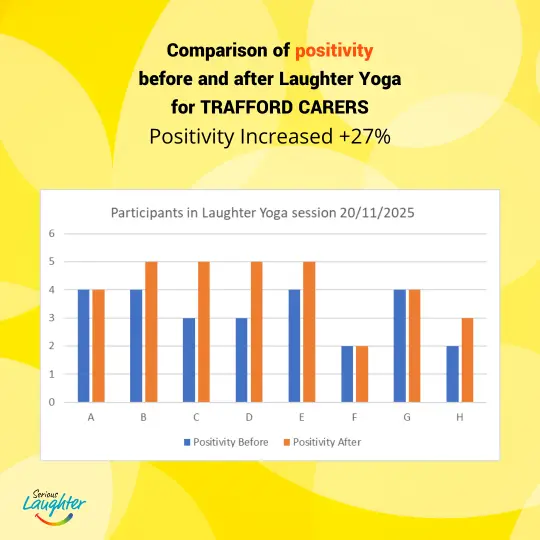
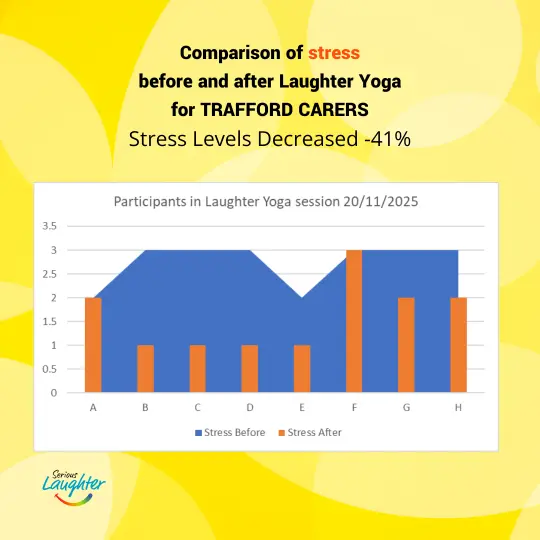
My goal is to help save the NHS £1 million. Not through any single programme or grand gesture, but gradually – by supporting people with mild-to-moderate depression to explore alternatives to antidepressants, and by reducing the cost and impact of loneliness on the health system.
That might sound ambitious. It is. But the numbers are real. In 2023-24, the NHS spent £220 million prescribing antidepressants to 8.7 million patients in England. When you factor in GP appointments for monitoring and repeat prescriptions, the cost per person with mild-to-moderate depression runs to around £150 a year. And a University of Exeter study published in 2025 found that people who are often lonely incur around £850 more in annual NHS costs than those who are not – covering GP visits, outpatient appointments, and hospital admissions.
My calculation is straightforward. If Laughter Yoga helps 500 people with mild-to-moderate depression choose a community-based route rather than long-term medication, that is a saving of around £75,000 a year. If it helps 1,100 often-lonely people build genuine connections and reduce their NHS footprint, that is a further saving of close to £935,000. Combined, that is over £1 million – and given that Serious Laughter has already reached more than 13,000 people, these are not numbers pulled from thin air.
I want to be clear: I am not anti-medication. For many people, antidepressants are exactly the right support. But for those with mild-to-moderate symptoms, there is growing evidence that community-based interventions can be just as effective – and significantly less costly. I want Laughter Yoga to be part of that conversation.
My hope is simple: that Laughter Yoga becomes a recognised, regularly offered part of social prescribing pathways across the UK. Not as a novelty, but as a genuine, evidence-supported tool for combating social isolation, providing mental health support, and helping people feel more connected to the communities around them.
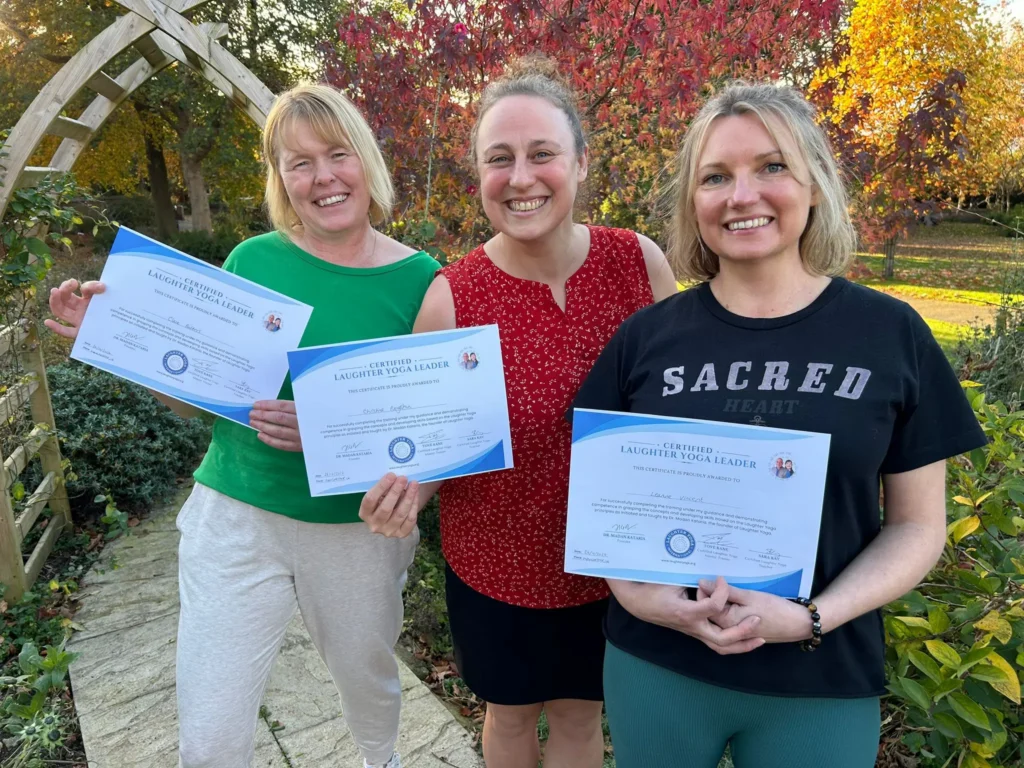
Serious Laughter and Laughter Yoga leaders and teachers deliver virtual and face-to-face sessions across Manchester, Cheshire, North Wales, and the wider UK. If you are looking for local wellbeing support or community resources near you, I’d love to help you find a Laughter Yoga session – or if there isn’t one nearby, take the leap and join a Certified Laughter Yoga Leader Training Course and start one up. Exactly what I did. Serious Laughter has trained mental health nurses and social prescribers, alongside yoga teachers and holistic coaches.
If you’re a GP, a social prescribing link worker, a social prescriber, or part of a VCSE organisation, I’d love to have a conversation about how Laughter Yoga could complement your work and help you and your clients. And if you’re someone who has found your own way to Laughter Yoga through a difficult period, I’d love to hear your story too.
Because that’s really what this is about. People helping people. Communities holding communities.
That’s social prescribing. And that’s why I do what I do – making a positive difference to lives.
Sunny Turner is the founder of Serious Laughter, an FHT-accredited Laughter Yoga business based in Manchester. She delivers sessions to corporate teams, schools, NHS organisations, charities, and community groups across the UK – in person and online.
If you’d like to find out more about bringing Laughter Yoga into your social prescribing programme or community setting, get in touch or Book a call
Public virtual Laughter Yoga Sessions you can refer your clients to are shown in this section.
References
- NHS Antidepressant Prescribing Data In 2023-24, 8.7 million patients were prescribed antidepressants in England at a cost of £220 million. Hansard – UK Parliament, December 2024
- The Cost of Loneliness to the NHS University of Exeter / PLOS One, September 2025. Often-lonely people incur around £850 more in annual NHS costs than non-lonely peers. Additional news release.
- Social Prescribing – Evidence and Evaluation National Academy for Social Prescribing. Evidence base, including 5.5 million GP referrals and £4 NHS return per £1 invested.
- Laughter Yoga and Social Prescribing – Academic Research Hatchard, A. & Worth, P. (2021). ‘No laughing matter: Qualitative study of the impact of laughter yoga suggests stress inoculation.’ European Journal of Applied Positive Psychology, 5, 2, 1-11.
- WHO on Loneliness World Health Organisation Commission on Social Connection, November 2023. Loneliness is recognised as a priority public health problem.
- Comedy on Prescription – Craic Health https://craic.health

Sign Up
Receive wellness tips & uplifting videos from Serious Laughter.