Employee Engagement Strategies for 2026

By Sunny Turner
Employee Engagement Strategies for 2026: What the Data Tells Us
There’s a moment in many workplace conversations where someone mentions “employee engagement” and everyone nods politely – before carrying on exactly as before. It’s one of those phrases that’s become so familiar it’s almost lost its weight.
But the numbers behind it haven’t. And Gallup’s 2026 Employee Engagement Guide is a timely reminder of just how serious the situation has become.
The State of Engagement Right Now
According to Gallup’s research, fewer than one in three employees feel genuinely connected to their organisation’s mission. Less than half say they clearly understand what’s expected of them at work. And disengaged employees are costing the global economy an estimated $2 trillion in lost productivity every year.
That’s not a cultural inconvenience. That’s a business crisis.
Closer to home, only 10% of UK employees are considered actively engaged at work, according to data from People Insight. The rest? Either going through the motions or actively disengaging and taking others down with them.
What Gallup Says Actually Works
The guide points to three core pillars that drive meaningful employee engagement strategies: clarity, connection, and development.
Clarity means people know what they’re there to do. Connection means they feel part of something, not just employed somewhere. Development means they can see a path forward – and that their organisation is investing in that journey.
None of these is a new idea. But the data around them is striking.
Gallup found that managers alone account for 70% of the variance in team-level engagement. Seventy per cent. That’s not a small lever – that’s the whole machine. When managers are supported, enabled, and given the tools to lead with clarity and empathy, engagement follows. When they’re left to figure it out on their own, it doesn’t.
The guide also highlights a growing problem with development. Less than half of employees currently participate in any job-related training, and in 2025, the majority of Chief Human Resources Officers reported that development was the area they struggled with most – a figure that had risen sharply in just one year.
The Missing Piece: How People Actually Feel
Here’s what strikes me most about the Gallup findings. You can build the most thoughtful employee engagement strategies in the world – structured one-to-ones, clear objectives, development plans, the works – and still have a team that feels oddly flat.
Because strategies address behaviour. They don’t always reach the bit underneath: how people feel when they walk into a room together.
That’s not a criticism of good management. It’s an acknowledgement that human beings are social creatures, and that genuine connection – the kind where you actually relax, laugh, and feel like yourself for a moment – can’t always be manufactured through a framework.
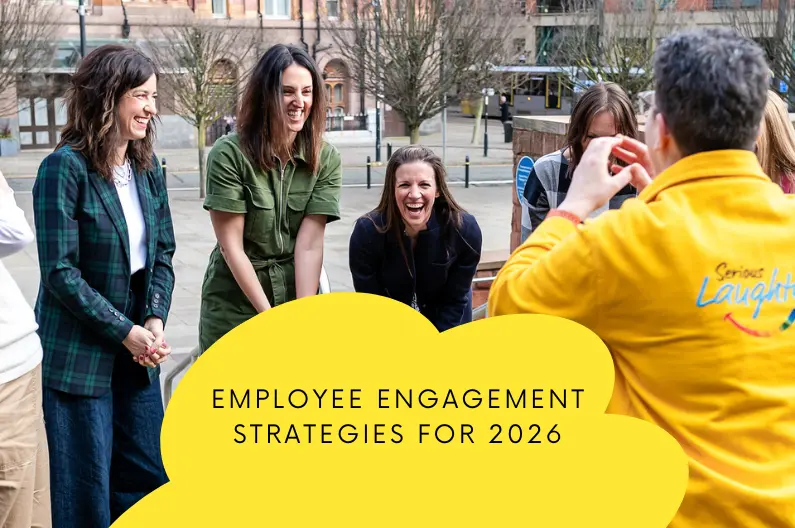
It’s exactly why I started Serious Laughter. Not because I thought laughter was a fix-all, but because I’d seen – and felt – what happens to a group of people when they share a moment of genuine, unforced joy together. The defensiveness drops. The hierarchy softens. People look at each other differently.
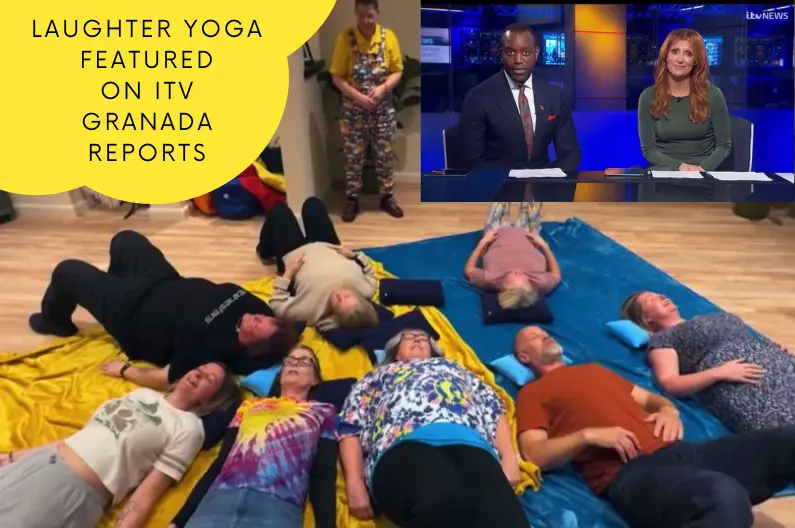
Laughter Yoga doesn’t require jokes, comedy, or anyone to be particularly funny. It uses simple, accessible exercises that prompt the body to laugh – and once that happens, something real tends to follow. Teams that have sat through months of engagement surveys suddenly find themselves actually talking to each other.
What the Research Shows About Laughter at Work
The science backs this up. Laughter reduces cortisol, the body’s primary stress hormone. It triggers the release of endorphins, dopamine, and serotonin – the chemicals that make us feel connected, motivated, and well. Regular laughter has been shown to support cardiovascular health, boost immune function, and reduce absenteeism.
Organisations that have worked with Serious Laughter have reported an average 40-50% reduction in stress levels following a session, alongside a 20% average boost in productivity. Those aren’t soft metrics – they’re the kind of outcomes that sit directly alongside the Gallup priorities of connection and wellbeing.
Practical Employee Engagement Strategies for 2026
If you’re building or reviewing your approach to engagement this year, here are a few things worth considering alongside the Gallup framework:
Start with how people feel, not just what they do. Surveys and metrics tell you what’s happening. They don’t always tell you why. Creating space for people to experience something together – laughter, movement, play – can reveal dynamics no questionnaire will surface.
Invest in your managers, but also give them something to offer. Manager enablement is the biggest lever in the Gallup data, and that means more than training. It means giving managers wellbeing tools they can actually use with their teams.
Make connection a regular habit, not a one-off event. One team-building day a year is better than nothing. But monthly or quarterly touchpoints – short, light, genuinely fun – do far more to sustain the kind of culture where people want to stay.
Don’t underestimate the power of laughter. It sounds simple, because it is. That’s the point.
Ready to Do Something a Bit Different?
If you’re thinking about your employee engagement strategies for 2026 and want to do something that genuinely moves the needle on connection and wellbeing, I’d love to chat.
Serious Laughter offers corporate Laughter Yoga sessions of 30 to 90 minutes, in person or online, designed to fit your team and goals. Every corporate booking also funds two free community session spaces – because wellbeing shouldn’t stop at the office door.
Find out more about our team-building sessions here.
Source: Gallup, Employee Engagement Strategies for 2026 Guide
Sunny Turner | Founder, Serious Laughter | FHT-Accredited Laughter Yoga Teacher | Museum of Happiness Facilitator | Comedy on Prescription Certified Facilitator | seriouslaughter.co.uk

Sign Up
Receive wellness tips & uplifting videos from Serious Laughter.