What Happens in Your Head When You Laugh with simulated laughter

By Sunny Turner
Laughter and the Brain: What Happens in Your Head When You Laugh (Even When It’s Simulated Laughter)
Summary
What’s actually going on in your head when you laugh – even when it’s simulated laughter? This World Brain Day, I want to answer a question I get asked all the time: what’s actually going on in your head when you laugh? The answer amazed me when I first learned it, and it’s why I love sharing laughter exercises to see the difference before and after. Laughter lights up your whole brain, floods it with feel-good chemicals, turns down the stress hormones that leave you feeling wrung out, and even gives your creativity a lift. Here’s the part that surprises everyone: your brain does all of this even with simulated laughter. That’s the whole secret behind Laughter Yoga. No jokes needed. This is the science, in plain English, and why you really don’t need to feel happy to feel the benefit.
What is World Brain Day, and why does laughter belong in it?
World Brain Day falls on 22 July, and it’s all about looking after our brains and our neurological wellbeing. When most of us think about brain health, we picture crosswords, supplements, or a good night’s sleep. Laughter never gets a mention. I think that’s a shame, because it turns out to be one of the kindest things you can do for your brain. It works your brain, your body, and your connections with other people, all at once. And it’s free.
What’s really happening in your brain when you laugh?
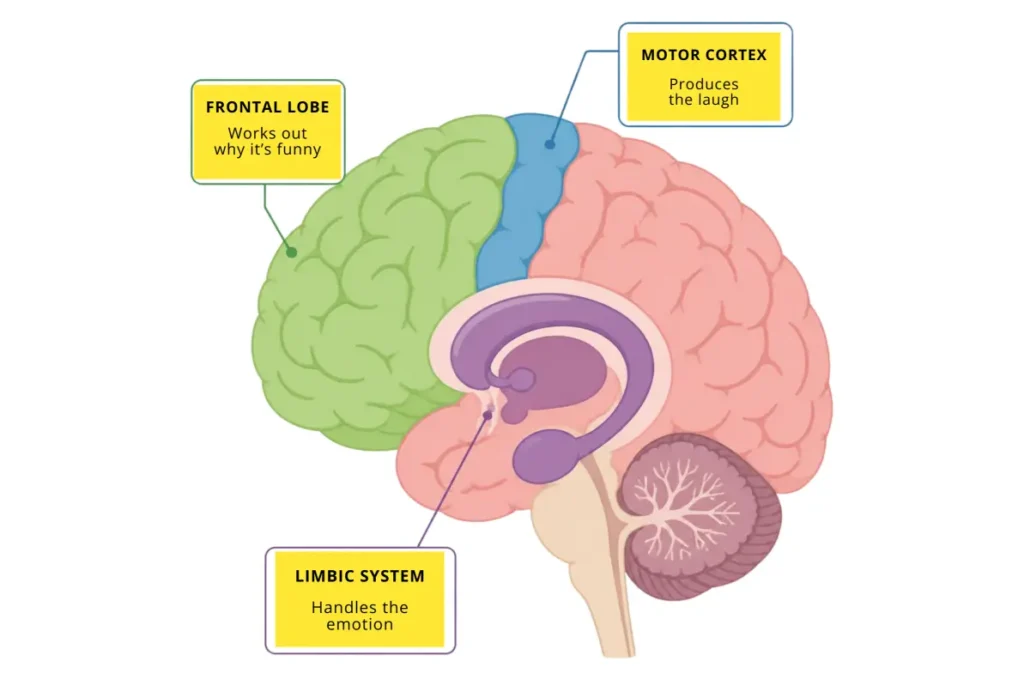
Here’s the first thing that surprised me. Laughter doesn’t sit in one neat little corner of your brain. It runs right through it. When something tickles you, your frontal lobe works out why it’s funny, your limbic system handles the emotion, and your motor cortex kicks in to actually produce the laugh. Laughter is produced through a circuit that runs across many regions of the brain, rather than being tucked away in one spot like some other feelings are.
So every time you laugh, you’re giving your whole brain a little workout. I love that.
Which happy chemicals does laughter release?
This is where it gets exciting for anyone who cares about their mood. When you laugh, your brain lets loose a whole cocktail of good stuff. Laughing releases dopamine, which sharpens motivation and attention; oxytocin, the bonding hormone that helps us feel close to others; and endorphins, which bring pleasure and can even dull pain.
And there’s something extra special about laughing with other people. A study in The Journal of Neuroscience found that social laughter released the brain’s own natural opioids – its home-made painkillers – and actually raised people’s pain thresholds afterwards. So laughing together isn’t just lovely. It’s doing you real, measurable good.
Does laughter really give you more oxygen?
This one delights me because it’s such a simple idea, with proper scientific backing. Think about what a good belly laugh actually is – it’s a long, forced exhale. And clearing out that stale air is exactly what lets fresh, oxygen-rich air come in. When you laugh, your diaphragm and the muscles across your chest and tummy all tighten and pump, pushing stale air out and pulling fresh air deeper into your lungs than usual. It even helps open up the tiny air sacs deep in your lungs, giving your body more room to take on oxygen.
Here’s the thing most of us never realise: a normal breath only uses a fraction of our lung capacity, and stress makes our breathing shallower still. So we walk around half full of stale air without knowing it. A proper laugh empties the lungs more fully than a normal breath does, which is why it leaves you feeling so refreshed. It’s also exactly why Laughter Yoga weaves deep, yogic breathing in between the laughter exercises – the two go hand in hand, working your lungs and topping up your body with fresh air.
Does laughter make you more creative?
Here’s one I feel in my own life all the time. I’m always more full of ideas after a good laugh. It turns out there’s real science behind that. A classic set of experiments by Isen and colleagues found that people who watched a few minutes of a comedy film performed better on creative problem-solving tasks than those who watched a neutral film or engaged in light exercise. The leading explanation is dopamine – the same feel-good chemical that laughter releases – which appears to support the flexible, wide-ranging thinking that creativity depends on.
So when your brain gets that little dopamine lift from laughing, it’s not just cheering you up. It’s helping you think more freely, make new connections, and spot ideas you might otherwise have walked straight past. I see it in workshops constantly – people arrive stuck and leave with their heads buzzing.
There’s a longer-game benefit too. Our brains are shaped by what we do again and again, through something called neuroplasticity – the way repeated experiences strengthen the brain’s connections over time. Regular laughter, like any positive habit you keep coming back to, helps reinforce those pathways. The more you practise choosing lightness, the more natural it becomes.
Can laughter really lower stress?
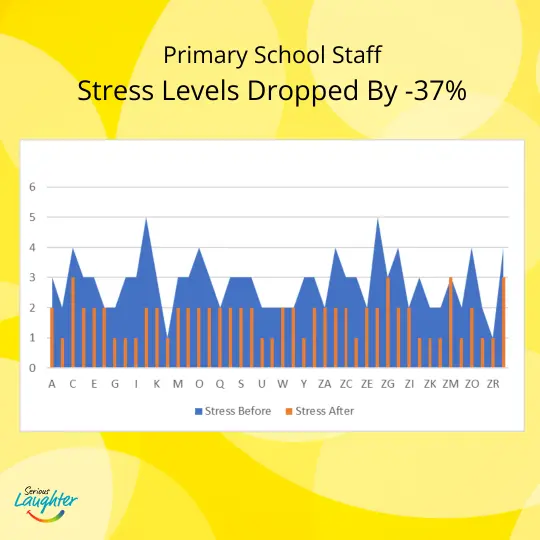
Yes, and this is the bit I find myself talking about most. Laughing has been shown to lower stress hormones like cortisol and lift endorphins, the brain’s feel-good chemicals. Cortisol is the one that leaves you tense, frazzled, and on edge. Bringing it down, even for a few minutes, gives your whole nervous system a chance to breathe.
When life and work are piling on the pressure, simulated laughter is a tool you can reach for on your hardest day.
Why is laughter so contagious?
You’ll know this feeling. Someone next to you starts giggling, and before you’ve worked out why, you’re off too. There’s a real reason for that. When you hear someone laugh, the part of your brain that gets you ready to move switches on as if you were about to laugh yourself, thanks to mirror neurons that fire both when we do something and when we watch someone else do it. Just the sound of a laugh primes your brain to make one, which is why it spreads through a whole room even when there’s no joke at all.
This is the magic I see in every group session. The laughter feeds itself. One person sets another off, and away we go.
Does simulated laughter affect the brain in the same way?
This is the question I get more than any other, and it sits right at the heart of Laughter Yoga. You’d assume your brain only rewards you for “real” laughter, the kind a brilliant joke sets off. It doesn’t work that way.
Dr Madan Kataria, who founded Laughter Yoga, says both simulated and spontaneous laughter give you the same benefits, because your mind might know the difference, but your body simply doesn’t. Here’s the clever bit: your body can’t tell simulated laughter from the real thing, so it hands your brain all the same rewards anyway. He calls it “motion creates emotion.” The idea is that choosing to laugh gives you the same benefits as natural laughter, and in Laughter Yoga, that simulated laughter so often turns into the real thing. Find out more about the brain benefits of laughter.
The wider research says the same. A review of laughter therapy found that both spontaneous and simulated laughter improve mental and physical health, which backs up a key principle of Laughter Yoga: your body can’t tell voluntary laughter from involuntary. Some studies have even found the simulated kind to be more beneficial than the spontaneous.
This is exactly why you don’t have to feel happy or need a single joke to walk out of a session feeling lighter. You start by laughing on purpose, your body responds as though it were spontaneous, and more often than not, it becomes real anyway. I’ve seen it happen in the most sceptical rooms, and it never stops delighting me.
How can I use this to look after my own brain?
You don’t need a comedian, a funny film, or even a good mood to give your brain this lift. That’s the beauty of it, and it’s the thing I wish more people knew. A few minutes of laughing on purpose – a bit of deep breathing, some playful movement, a bit of eye contact, and a willingness to feel a little daft – is enough to set the whole thing in motion.
Laugh along to a short clip. Join a session, in person or online. Or just start your morning with one minute of deliberate laughter and let your brain do the rest. Your brain does the heavy lifting. Your only job is to begin.
Frequently asked questions
Do I need to feel happy to benefit from laughter?
No, and this is my favourite thing to tell people. Your body responds to laughter, whether it starts out spontaneous or on purpose. You can be having a rotten day and still get the full benefit.
Does simulated laughter really work?
Yes. Studies suggest simulated laughter fires the same pathways and releases the same feel-good chemicals as spontaneous laughter.
Can laughter help me think more creatively?
Yes. Research shows that a lift in positive mood – the kind laughter brings – improves creative problem-solving, most likely through the dopamine your brain releases when you laugh.
Does laughter help with breathing?
It does. A hearty laugh is essentially a long exhale that clears stale air from your lungs and lets fresh, oxygen-rich air come in. It’s why Laughter Yoga pairs laughter with deep breathing.
How long do I need to laugh to feel a difference?
Even short bursts help. Many exercises last just a minute or two.
Is Laughter Yoga suitable for people who feel sceptical?
Absolutely. I was sceptical once too. Plenty of people arrive doubtful and leave surprised. You don’t have to believe it will work for the science to do its thing.
Can laughter help with stress at work?
Yes. Because laughter lowers cortisol and quickly lifts mood, it’s a simple, accessible tool for teams under pressure.
Work with Serious Laughter
If this has made you curious about bringing laughter into your workplace, community group, or organisation, I’d love to talk it through with you.
Have a look at our corporate offerings to bring your team building events more laughter, or take a look at our full services pack here.
Get in touch at happy@seriouslaughter.co.uk.
Sunny Turner | Founder, Serious Laughter | FHT-Accredited Laughter Yoga Teacher | Museum of Happiness Facilitator | Comedy on Prescription Certified Facilitator

Sign Up
Receive wellness tips & uplifting videos from Serious Laughter.