Why Using Our Phone Less Can Help Us Live A Happier Life

By Sunny Turner
Why Using Our Phone Less Can Help Us Live A Happier Life
How to reduce phone use to be happier
Smartphones have become a significant part of society and, consequently, something we struggle to live without. We’re rarely more than a metre away from our phones! They accompany us everywhere, and the result is that we spend more time with them than ever before. The average smartphone user in the UK spends 4.5 hours a day on their phone. If you do the maths, that’s over 2 whole months a year (without sleep!) that we’re spending on our phones. If I asked you what you would love to spend 2 months a year doing, I bet you wouldn’t say looking at your phone!
Phones, of course, are a handy tool. Having so many opportunities to communicate, capture images, and document life is always great! BUT, how often do you consider the negative side of phones?
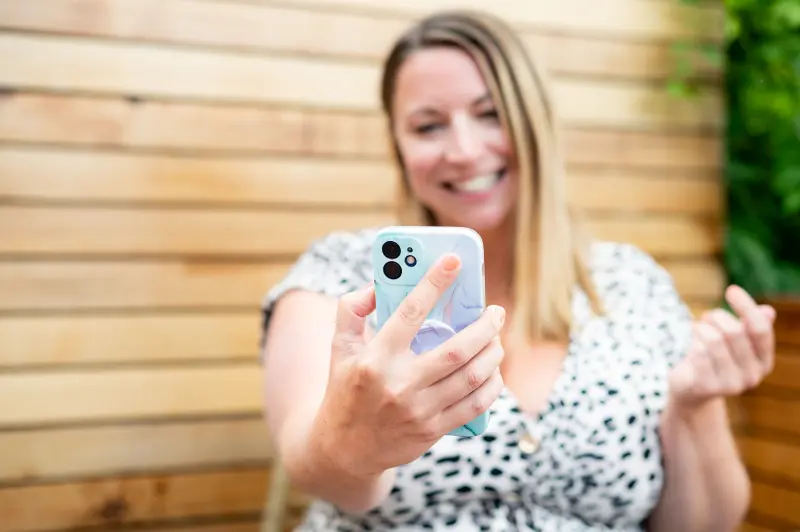
How Might Phones Be Negatively Impacting Your Life?
One of the main issues is time. It’s something we all feel like we’re chasing and wanting more of. Yet, we give 4.5 hours a day to our phones. What could you do with more time? What could you achieve? How could you live a more fulfilled life by having more time?
Our phones are taking us away from the people, things and actions that can bring more joy to our lives (such as Laughter Yoga and other wellbeing activities). While we may find small moments of joy in our phones, such as a funny video or a message from a loved one, the amount of time we spend on them isn’t a reflection of how much joy they bring us.
Spending so much time on our phones can also negatively impact our mental health in other ways. Becoming absorbed in others’ lives on social media (which is often a misrepresentation of reality) can leave us with feelings of inadequacy. Our phones can also reduce our sleep, especially when we look at them just before going to bed.
And they reduce our ability to focus and pay attention. This can have a significant impact on our productivity or our ability to focus on things that can bring more joy to our lives. The scroll, scroll, scroll and repeat action has trained our brains to focus on small snippets of information at a time. If you find yourself jumping quickly from one task to another, your phone might be to blame.
How Can You Reduce Your Phone Use?
Reducing phone use isn’t about never using your phone again. They are excellent tools after all. It’s about using it less to gain back more time and being more conscious in your use. Three actions that can help reduce your phone use are:
1. Turn off notifications – notifications interrupt our day and take our focus away from what we are doing. They draw us to our phones, and we can then fall down the rabbit hole of losing time to our phones again. Turning them off makes a big difference to your phone use.
2. Leave it out of sight – the addictive nature of our phones means that if they are near us, we are likely to pick them up. Keeping them out of sight easily solves this problem. Try keeping your phone in another room, or on the other side of the room you’re in, so you’re not tempted to keep picking it up.
3. Use blocking apps – apps like Freedom and Forest are designed to help you reduce your phone use by blocking access to other apps.
Using your phone less can help you live a more joyful life, give you time back for the people that matter and give you more time to do the things that bring you happiness.
Will you commit to reducing your phone use to be happier?
If you want to explore reducing your phone use, Sam Flynn, part of the Serious Wellbeing Team, has a membership – The Unplugged Club – that can help!
It’s very simple: each week, you receive an email with a digital wellbeing action that will help you gain control of the digital world. Taking each small action will gradually give you back more time, improve your mental health, sleep, focus and attention AND improve your productivity and performance.
Plus, members are invited to a monthly live call to discuss challenges in managing their digital wellbeing and gain more inspiration and accountability.
No apps, logins or WhatsApp/Facebook groups! Just a simple weekly action to take! And it’s incredibly affordable!
You can find out more about The Unplugged Club here!
Sam Flynn – founder of The Unplugged Club, trainer and speaker about digital wellbeing
If you’re looking for ways to bring more joy back into your team’s day, our corporate wellbeing events are a lovely place to start.
About Sam Flynn:
Sam Flynn is a digital wellbeing and digital culture trainer and speaker. With a background in Organisational Psychology, Sam has been running a social media training business for the last 16 years. After noticing her own smartphone use had increased dramatically during the pandemic, and the impact this had on her own wellbeing and mental health, Sam researched the impact that the digital world is having on our wellbeing. She has combined her psychology and digital backgrounds to provide digital wellbeing sessions in businesses, to parents and in schools.
Sam delivers sessions on digital culture within organisations, reducing smartphone use, and managing our children’s smartphone use. Sam’s membership, The Unplugged Club, is designed to help you improve your digital well-being step-by-step. The digital world is not going away, so Sam helps people embrace it in a positive way!

Sign Up
Receive wellness tips & uplifting videos from Serious Laughter.