How to Switch Off From Work: How Laughter Helps Teams Find Balance


By Sunny Turner
Executive summary
National Work Life Week runs from 5 to 9 October 2026, and it’s a timely moment to look at how to switch off from work, and why so many of us find it so hard. Long hours, constant notifications and blurred boundaries at home keep the body in a state of alert long after the laptop closes.
In my experience, laughter is one of the quickest ways to help the body move from stress to rest. You don’t need to feel happy, and you don’t need jokes. Laughter Yoga uses simulated laughter exercises, guided by a trained leader, that often turn into real laughter within minutes.
This article explains what poor work-life balance feels like for teams, why switching off is harder in hybrid working, how laughter supports the body’s relaxation response, and how employers can mark National Work Life Week in a way people will remember.
What does poor work-life balance actually feel like for teams?
It rarely announces itself. It looks like checking emails while the kettle boils, replaying a difficult meeting at bedtime, or feeling tired on a Monday morning before the week has even started.
When organisations book a session with me, they describe the same pressures again and again: heavy workloads, long hours, tight deadlines, restructures, and teams who feel stretched and disconnected. People in caring and frontline roles, from NHS staff to social workers, tell me they give so much of themselves at work that there’s little left for home.
The national picture reflects this. The Health and Safety Executive reports that 964,000 workers experienced work-related stress, depression or anxiety in 2024/25, with an estimated 22.1 million working days lost as a result. Behind those figures are people who simply can’t find the off switch.
How to switch off from work when you work from home?
Flexible and hybrid working brings real benefits, and many people wouldn’t go back. The challenge is that the natural markers between work and home have faded. There’s no commute to wind down on, no colleague saying goodnight at the door, and the laptop is often sitting on the kitchen table.
I’ve also noticed that remote and hybrid teams miss the small moments of shared laughter that used to happen by the coffee machine. Those moments help people feel connected, and they release tension before it builds. Without them, stress tends to travel home with us, even when home is where we’ve been working all day.
For managers leading teams across locations or time zones, this can show up as quieter meetings, lower energy on video calls, and a sense that people are coping alone. Learning how to switch off from work starts with giving the body a clear signal that the working day is over.
How does laughter help the body move from stress to rest?
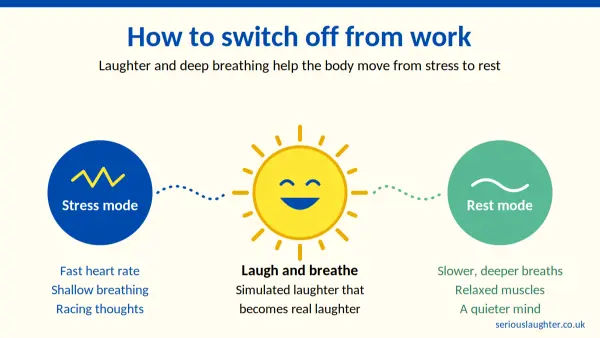
When we’re under pressure, the body’s stress response keeps us alert, with a faster heart rate, shallow breathing and tense muscles. That’s useful for a deadline, but it isn’t meant to run all evening.
When people ask me how to switch off from work, I often suggest starting with the body rather than the mind. A good, hearty laugh works a little like a reset, boosting circulation and helping muscles relax. Many people notice a lovely sense of calm afterwards, as the parasympathetic nervous system, often called the rest and digest system, takes over.
One of the things people notice most is that it’s almost impossible to laugh heartily and worry at the same time. For the whole session, the busy, overthinking part of the mind gets a rest, as attention moves into the breath and the body. Many participants tell me it’s the first time all week their head has felt quiet.
Laughter Yoga also includes deep breathing between laughter exercises. Longer out-breaths are a simple, well-known signal to the body that it’s safe to slow down. If you’d like to explore this further, I’ve written more about how laughter relaxes the body and improves sleep.
Do you need to feel happy to laugh?
No, and this is the part people find most surprising. Laughter Yoga doesn’t rely on jokes, comedy or a sense of humour. It uses simulated laughter exercises, combined with playfulness, eye contact and breathing. Many people find the body responds in a similar way to simulated and spontaneous laughter, and in a group, simulated laughter usually becomes real laughter very quickly.
I came to Laughter Yoga in 2016 during a period of depression. I didn’t feel happy, and I didn’t need to. What I found was a way to laugh my way out of my head and back into my body, and I loved it from the very first session.
That’s why I have great empathy for anyone who feels unsure about joining in. You’re welcome to take part at whatever level feels comfortable, and many of the most hesitant people in the room end up laughing the loudest.
What happens in a workplace laughter session?
Since 2017, I’ve shared laughter with more than 13,000 people, from NHS teams and universities to corporate offices and community groups. Every session is led by a trained Laughter Yoga Leader, so people can relax and simply join in.
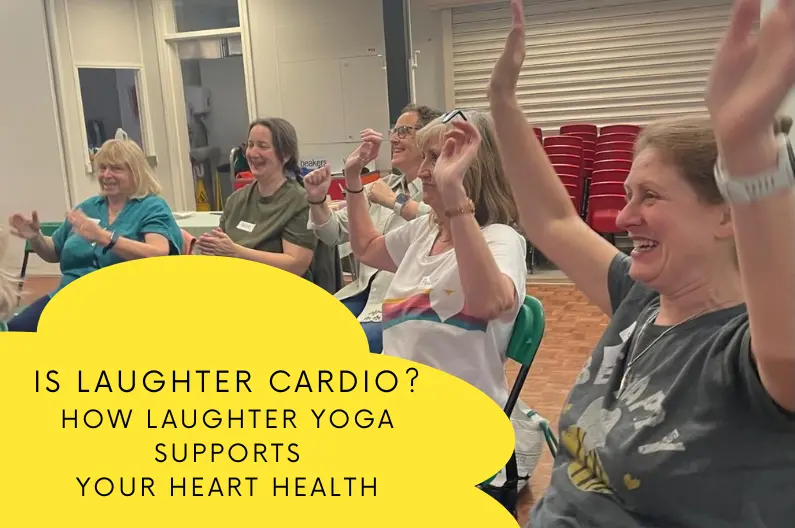
A typical 60-minute session has two parts. First comes Laughter Yoga: gentle warm-ups, playful laughter exercises and deep breathing, all done standing or seated, so everyone can take part. Then I guide the group through Yoga Nidra, a deeply restful guided relaxation that helps people let go of the day.
Many organisations choose to include a short before-and-after wellbeing check-in. I love this part, and it’s why I love sharing laughter exercises to see the difference before and after. Faces soften, shoulders drop, and people who arrived quiet often leave chatting with colleagues they rarely speak to. Sessions work in person or online through your own Teams or Google Meet platform, which makes them ideal for hybrid teams.
How can employers mark National Work Life Week in a meaningful way?
National Work Life Week, run by the charity Working Families, encourages employers to offer wellbeing activities and to talk openly about flexible working. Here are a few ideas I recommend:
- Model the off switch. When leaders log off on time and avoid late emails, it gives everyone else permission to do the same.
- Protect breaks. A proper lunch away from the screen is one of the simplest ways to reduce afternoon stress.
- Ask, then listen. A short, anonymous pulse survey on workload and balance shows staff their wellbeing matters.
- Bring people together to laugh. A lunchtime Quick Happiness Boost or a Stress Buster workshop gives teams a shared experience of relaxation, whether they’re in the office or online.
- Keep the momentum going. World Mental Health Day follows on 10 October, so the week can open a conversation that continues.
I believe the most valuable thing an employer can offer is permission: permission to rest, to switch off, and to enjoy each other’s company at work.
Take a look at our YouTube channel to try Laughter Yoga exercises
Frequently asked questions
When is National Work Life Week 2026?
National Work Life Week 2026 runs from Monday 5 to Friday 9 October. It’s an annual campaign led by the charity Working Families that encourages employers and employees to talk about wellbeing at work and work-life balance. Many organisations use the week to offer staff wellbeing activities and to highlight flexible working.
Why can’t I switch off from work in the evening?
When stress builds through the day, the body’s stress response can stay active long after work ends. Checking emails, working from home and replaying conversations all keep the mind alert. Activities that relax the body, such as deep breathing, gentle movement and laughter, can help signal that it’s time to rest.
Does laughter really reduce stress?
Yes. Laughter first stimulates, then relieves, the stress response, helping muscles relax and improving circulation. Many people feel noticeably calmer afterwards. Laughter Yoga combines laughter exercises with deep breathing, supporting the body’s natural relaxation response, and it works without jokes or a sense of humour.
What is Laughter Yoga in the workplace?
Workplace Laughter Yoga is a guided session in which a trained Laughter Yoga Leader takes a team through simulated laughter exercises, playful movement and deep breathing. Simulated laughter often turns into real laughter in a group. Sessions can be held in person or online and suit teams of any size or fitness level.
How can employers support work-life balance?
Employers can support work-life balance by modelling healthy habits, such as logging off on time, protecting breaks and respecting flexible working arrangements. Asking staff about their workload and acting on what they say builds trust. Group wellbeing activities, such as a laughter session, also help teams relax and reconnect.
Work with the Serious Wellbeing Team
If your team is finding it hard to switch off, I’d love to talk about how a laughter session could help, whether it’s for National Work Life Week, World Mental Health Day or a regular wellbeing boost through the year.
You can explore our corporate wellbeing events, download the Serious Laughter services pack, or say hello at happy@seriouslaughter.co.uk.
What’s one small thing that helps you switch off at the end of the working day?
Sunny Turner | Founder, Serious Laughter | FHT-Accredited Laughter Yoga Teacher | Museum of Happiness Facilitator | Comedy on Prescription Certified Facilitator

Sign Up
Receive wellness tips & uplifting videos from Serious Laughter.