Laughter and Dementia: Why It Reaches People When Words Can’t

By Sunny Turner
In short: Laughter and dementia might seem an unlikely pairing, but September’s World Alzheimer’s Month is a good moment to think differently about how we connect with the people in our lives living with dementia. As words become harder to find, laughter, music, singing and playful moments often reach people when conversation no longer can.
This article looks at why that happens, what it means for families, workplaces and care teams, and how our accessible Joyful Wellbeing Boosts, which blend laughter with music, singing and puppets, can offer a moment of real connection to someone who might otherwise feel out of reach.
What happens to connection when words start to fade?
One of the hardest parts of dementia, for families and carers alike, is the slow loss of conversation. The person is still there, but the usual bridge between you, the back-and-forth of words, gets harder to cross. You ask a question, and the answer doesn’t come. You share a story, and it doesn’t land the way it used to.
It’s easy to feel you’ve run out of ways to reach someone. In my experience, that feeling is where a lot of the sadness sits, not in the diagnosis itself, but in the sense of distance that grows alongside it.
Here’s what I’ve observed, though, both in sessions and in the research: connection doesn’t only travel through words. And some of the oldest, warmest routes to another person stay open long after language becomes difficult.
Laughter and dementia: why does it reach people when words can’t?
Laughter is older than language. Long before we could speak, we could smile, giggle, catch a warm look from someone across the room and feel safe. Those responses are wired deep, and they tend to stay with us.
That’s why a shared laugh can land when a sentence won’t. It doesn’t ask the person to remember a name, follow a thread, or find the right word under pressure. It simply invites them into a moment that feels good, right now, with someone who’s glad to be there. There’s no test to pass and nothing to get wrong.
I’ve watched a room that felt flat and far away soften into smiles within minutes. Not because anything clever was said, but because we lowered the demand and raised the warmth. When the pressure to perform lifts, a lot becomes possible.
Do you need to be “good at” this to try Laughter Yoga
No, and I think this is the most freeing thing to understand. You don’t need training, a script, or a naturally sunny disposition. You need a bit of willingness to be playful and the confidence to lead gently.
In Laughter Yoga, we use accessible, simulated laughter exercises, playful movements, and eye contact that soon turn into the real thing. You don’t need to feel happy to begin, and you certainly don’t need jokes or comedy. That matters enormously here, because a person living with dementia may not follow a punchline, but they can absolutely feel the safety and joy of a shared, silly moment.
Laughter and dementia can be easy. Blow a few bubbles and watch them together. Wave and greet each other with an exaggerated, cheerful “hello.” Clap out a simple rhythm. Hum a tune from their era and let it carry you both. None of it depends on words, and all of it says the same thing: I’m here, and I’m glad to be with you.
What does this mean for families and carers?
I’m writing this from my own experience. Both of my parents are living with dementia, and much of what I understand about laughter and connection I’ve learned at their side, on the good days and the hard ones. There are conversations we can’t have any more. But there are still moments, a shared silly sound, a familiar song, a look that turns into a smile, when I know, without a single word, that we’re together. Those moments are everything to me.
So if you love someone with dementia, please hear this: the moments still count, even when they don’t stay. A laugh that’s forgotten an hour later was still real when it happened. The warmth lands in the body and the nervous system even when the memory of it slips away.
That can be a comfort on the hard days. You’re not aiming to fix or to reach some old version of the person. You’re offering a good moment, and then another one. Over time, those moments become the language you share, one that doesn’t rely on recall.
Be kind to yourself, too. Caring for someone with dementia is tough, exhausting work, and your own wellbeing is part of this. Letting yourself laugh isn’t a betrayal of how serious things are; you’ll be releasing stress and frustration. It’s often the thing that helps you keep going with an open heart.
What is a Joyful Wellbeing Boost, and why isn’t it just laughter?
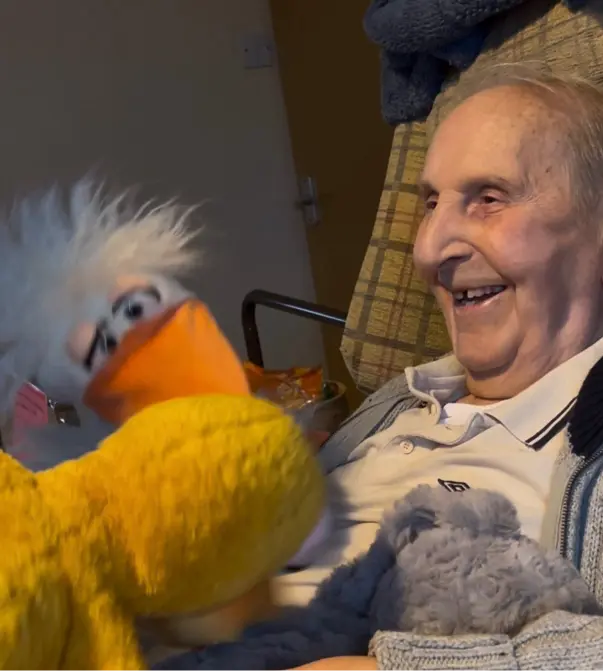
Laughter opens the door, but it isn’t the only way in, and I never want it to be the only tool in the room. When I bring sessions into care settings, laughter sits alongside music and singing, a few soft puppets, playful movement and plenty of warmth. A familiar song can reach a person when almost nothing else does. A friendly puppet can draw out a smile. No words are needed at all. It all does the same quiet work: lowering the pressure, inviting play, and giving everyone a way to take part, whether they join in fully or simply watch and smile. There’s no right way to take part. What matters is that everyone in the room feels safe, included and part of something joyful.
What people often take from a Joyful Wellbeing Boost goes beyond the moment itself. Many residents find it lifts their mood and offers a welcome break from the everyday, a little instant holiday. It can ease stress and calm anxiety, alleviate low mood, and leave people more relaxed and ready for a better night’s sleep. It’s a gentle, accessible bit of movement too, and one of the warmest ways to feel that sense of social connection that matters so much to all of us. None of this is a cure or a treatment, and I’d never claim it to be. But those small lifts in mood, ease, and connection can really make a difference to how someone feels day to day.
How can care teams and workplaces use this?
For care teams, laughter is one of the most accessible tools you already have, and it costs nothing. Woven gently into the day, it lifts mood, eases agitation, and builds trust between staff and residents. It can turn a routine moment- mealtime, a walk down the corridor, a morning greeting- into a point of connection rather than a task to get through.
For workplaces more broadly, World Alzheimer’s Month is a good prompt to reflect on the colleagues quietly carrying a lot. A huge number of people are caring for a parent or partner with dementia alongside their jobs, and they rarely talk about it. Building a culture where people can be honest about that, and where wellbeing is taken seriously, makes a real difference to the people carrying the heaviest loads.
Laughter isn’t a way of making light of hard things. It’s a way of staying human alongside them. Wellbeing workshops help lessen the pressure container.
FAQ
What is World Alzheimer’s Month? World Alzheimer’s Month runs every September and is coordinated by Alzheimer’s Disease International. It aims to raise awareness of dementia, challenge stigma, and encourage people to think differently about living well with the condition.
Can Laughter Yoga help people living with dementia? It isn’t a treatment or a cure, and it’s important not to overstate that. What it can offer is accessible, in-the-moment connection, joy and a sense of safety- things that reach people even when words become difficult. Many families and care teams find those moments deeply valuable.
Do you need jokes or a sense of humour for this? Not at all. Laughter Yoga uses simulated laughter exercises, playful movement and eye contact rather than jokes or comedy. This makes it especially suitable for people living with dementia, who can feel the warmth of a shared moment without needing to follow a punchline.
Is it suitable if the person is in the later stages of dementia? Often, yes, though it looks gentler. It might be a soft smile, a moment of eye contact, a familiar tune, or a warm, playful greeting. The aim is always comfort and connection, meeting the person exactly where they are.
What is a Joyful Wellbeing Boost? It’s a gentle, accessible session I bring to care settings that blends laughter with music, singing, puppets, playful movement and warmth. It isn’t just laughter, and it isn’t a performance. It’s designed so everyone can take part in their own way, meeting people exactly where they are, and leaving a sense of calm and connection that tends to linger afterwards.
I’m a carer, and I’m exhausted. Is it selfish to want to laugh? Not in the least. Your wellbeing matters, and letting yourself laugh helps you release stress and pent-up emotions to keep on your vital caring work with warmth and patience. Looking after yourself is part of looking after them.
Let’s stay connected
If this has struck a chord, I’d love to hear from you, whether you’re a family carer, part of a care team, or simply someone thinking about how to stay close to a person you love.
For community sessions and events, fill out an enquiry form or get in touch at happy@seriouslaughter.co.uk or WhatsApp +44 7974 778091.
In care and sheltered house settings, I bring Joyful Wellbeing Boosts, gentle sessions that blend laughter with music, singing and puppets to reach people exactly where they are. If that sounds like something your setting would value, do get in touch.
I’m Sunny Turner, founder of Serious Laughter and an FHT-Accredited Laughter Yoga Teacher, Museum of Happiness Facilitator and Comedy on Prescription Certified Facilitator. I deliver evidence-based, accessible laughter sessions that build positive connections and make life and work happier and healthier.

Sign Up
Receive wellness tips & uplifting videos from Serious Laughter.