Laughter for Stress Relief: An Instant Holiday for Your Brain
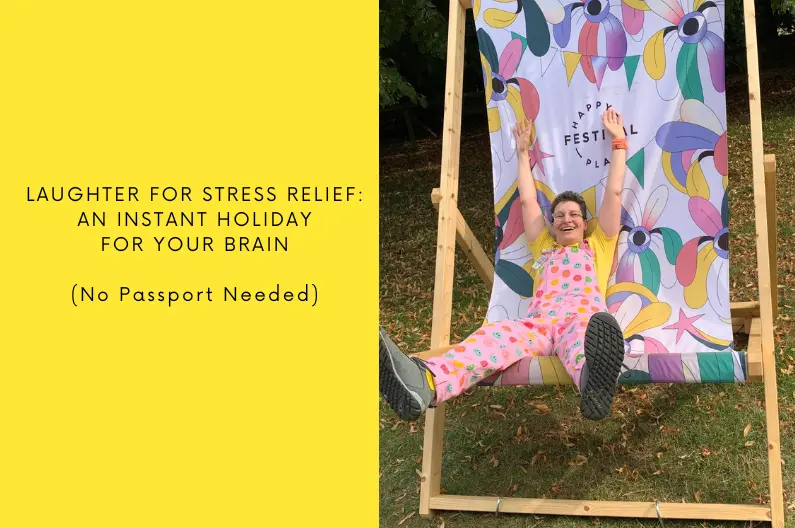

By Sunny Turner
Laughter for Stress Relief: An Instant Holiday for Your Brain (No Passport Needed)
Laughter offers a genuine mental break from stress, and there’s solid science behind why it feels so good. This article looks at three evidence-based effects of laughter: it lowers the stress hormone cortisol and activates the body’s “rest and digest” response; it stimulates gamma waves in the brain, creating a state of calm and clarity comparable to meditation; and it engages the whole body, boosting oxygen intake and releasing endorphins. Together, these effects explain why even a brief moment of laughter can feel like a little holiday – and why Laughter Yoga, practised regularly, offers lasting wellbeing benefits for individuals and teams. You don’t need to be happy to laugh, and you don’t need a single joke.
“Laughter is an instant vacation.”
It’s a classic quote often attributed to the legendary comedian Milton Berle, and it comes to my mind quite often. It captures perfectly how a quick chuckle or finding humour in a situation can immediately transport your mind, relieve tension, and give your brain a refreshing mental break.
But it goes deeper than that. There’s science behind how good it makes you feel, and a reason why it can offer real, transformative wellbeing for businesses and individuals. A hearty laugh provides a whole range of benefits for your mental and physical health.
When you’re laughing, you literally can’t think of anything else. It’s a little holiday from all the stress, all the worry, everything else that might be dragging you down. Afterwards, you feel refreshed and more relaxed. It’s chemical – but it’s not only that. When Laughter Yoga is practised properly and regularly, you get the lasting effects too.
Let’s take a look at what laughter actually does.
How does laughter reduce stress?
One of the most well-documented health benefits of laughter is its ability to reduce stress. When we’re under pressure, our bodies release cortisol, often called the body’s primary stress hormone. In the short term, cortisol is helpful – it prepares us to deal with challenging situations. But when stress becomes chronic, consistently high cortisol levels have been linked to problems including anxiety, poor sleep, weakened immunity, raised blood pressure, weight gain, and difficulty concentrating.
Research has shown that laughter can help lower cortisol levels, allowing the body’s stress response to switch off more quickly. At the same time, laughter activates the parasympathetic nervous system, also known as the “rest and digest” response. This helps slow the heart rate, relax the muscles, and restore a sense of calm after periods of tension.
The effect can be surprisingly immediate. After a few minutes of sustained laughter, many people report feeling physically lighter, mentally clearer, and emotionally more resilient. While the circumstances causing stress may not have changed, your body’s physiological response to those stressors has. That’s the difference. Laughter really is a wellbeing tool anyone can use when they need it – one of the many reasons I’m so passionate about it.
It’s like pressing the reset button on your nervous system. A weekend away helps you return feeling refreshed, and in a similar way, even a brief moment of laughter can interrupt the cycle of chronic stress and give your mind a much-needed break.
The gist: Laughter decreases levels of the stress hormone cortisol in your body.
What does laughter do to the brain?
Laughter isn’t simply an emotional reaction – it’s a whole-brain activity. Understanding humour draws on several different regions of the brain working together, including those responsible for language, memory, emotion, social understanding, and decision-making.
When something amuses you, your brain lights up in remarkable ways. Laughter stimulates the production of gamma waves, which are associated with heightened awareness, creativity, and a state of relaxed focus, as well as higher-level cognitive processing, learning, insight, and the integration of information across different parts of the brain.
Gamma waves are also observed during certain forms of meditation and mindfulness practice, during which people experience heightened awareness and a deep sense of calm. That’s why the shift can feel surprisingly similar to the calm and clarity many people describe during meditation.
This may help explain why laughter often leaves us feeling mentally refreshed. During a good laugh, our attention shifts away from repetitive worries and negative thought patterns and becomes fully absorbed in the present moment. Psychologists sometimes describe this as a form of “cognitive interruption” – a break in the cycle of rumination that so often fuels stress and anxiety.
Instead of dwelling on problems or replaying stressful thoughts, your brain becomes fully immersed in the here and now. That mental reset is one of the reasons laughter feels so refreshing – it’s like giving your mind a brief but restorative holiday.
The gist: Finding something amusing stimulates gamma waves in the brain, shifting you into a deeply relaxed state comparable to meditation.
Is laughter really a physical workout?
Have you ever noticed that after a really good laugh, your cheeks ache, your stomach muscles feel as though they’ve done a workout, and you take a deep breath afterwards? That’s because laughter is surprisingly physical.
A hearty laugh engages the diaphragm, abdominal muscles, chest, shoulders, and even the muscles in your face. Your breathing becomes deeper, increasing oxygen intake and delivering more oxygen-rich blood throughout the body. Your heart rate rises temporarily before returning to normal, creating an effect similar to light aerobic exercise.
Perhaps even more importantly, laughter triggers the release of endorphins – the body’s natural “feel-good” chemicals. Endorphins help reduce pain, improve mood, and create the pleasant sense of well-being often experienced after exercise. This is one reason laughter has been shown to increase pain tolerance in some studies.
Researchers have also explored laughter’s potential effects on cardiovascular health. Although laughing isn’t a substitute for regular exercise, periods of laughter may improve blood vessel function and temporarily increase circulation. It’s also wonderfully accessible – you can do it seated. With reduced muscle tension, improved breathing, and lower stress hormones, laughter creates a powerful combination that helps many people feel energised and relaxed at the same time.
The physical effects don’t necessarily stop when the laughter does. Muscle relaxation can continue for several minutes afterwards, while the mood-enhancing effects of endorphins may linger for considerably longer.
The gist: A good laugh engages the whole body, gets the blood pumping, and releases endorphins – the body’s natural feel-good chemicals.

So should I stop taking holidays?
Just to be clear: I’m not saying you shouldn’t take your time off and enjoy a getaway when you can. Please do that. What I’m saying is that in the times in between, you can experience the effects of laughter and really feel as though you’ve given yourself a little mental holiday. It’s not only fun and enjoyable – the science backs it up.
And here’s the part that surprises people most: you don’t need to be happy to laugh, and you don’t need a single joke. Laughter Yoga uses simulated laughter exercises to increase the likelihood of genuine laughter, without relying on comedy or humour. The body responds to the laughter either way.
Do yourself a favour, and laugh more. Your stress levels might just reach “drinking out of a coconut on a beach lounger” territory.
Frequently Asked Questions
Do I need to feel happy for laughter to work? No. Laughter Yoga is built on simulated laughter exercises, which give your body the same physical workout and chemical response as spontaneous laughter. Real laughter tends to follow naturally once you get going – no jokes required.
How quickly can laughter reduce stress? The effect can be remarkably fast. Many people report feeling lighter, calmer, and clearer after just a few minutes of sustained laughter, as cortisol drops and the “rest and digest” response kicks in.
Is Laughter Yoga suitable for people who are sceptical of wellbeing workshops? Absolutely – and you’re in good company. I came to Laughter Yoga through my own experience of depression, so I have real empathy for anyone feeling unsure. Sessions are welcoming, pressure-free, and grounded in science, which tends to put sceptics at ease very quickly.
Can Laughter Yoga be done sitting down? Yes. It’s a wonderfully accessible form of movement that can be practised seated, making it suitable for people of all ages and abilities in a wide range of settings.
Are the benefits only short-term? A single session offers an immediate lift, but the lasting effects come from practising regularly. Like any wellbeing habit, consistency is where the deeper benefits build.
Is Laughter Yoga safe for everyone? Laughter Yoga is gentle and accessible, and can be enjoyed seated, but because it involves deep breathing and light physical movement, I always recommend checking with your GP first if you have any health conditions you’re unsure about. You can read the full list of contraindications. Sessions can be adapted to suit different needs, and everyone is encouraged to take part at their own pace and rest whenever they need to.
Work with the Serious Wellbeing Team
If you’d like to bring the science of laughter to your workplace, team, or event, I’d love to talk it through with you. Whether it’s a conference icebreaker, a wellbeing workshop, or a Laughter Yoga Leader Training course, sessions can be delivered in person or online across the UK.
Learn more about our corporate wellbeing events, or take a look at our services pack to see how we can help.
Say hello at happy@seriouslaughter.co.uk.
Sunny Turner | Founder, Serious Laughter | FHT-Accredited Laughter Yoga Teacher | Museum of Happiness Facilitator | Comedy on Prescription Certified Facilitator

Sign Up
Receive wellness tips & uplifting videos from Serious Laughter.