Remote Working and Loneliness: How to Support Employee Wellbeing

By Sunny Turner
Remote Working and Loneliness: How to Support Employee Wellbeing
Remote working and loneliness are more closely linked than many employers realise. Remote and hybrid working hasn’t created workplace loneliness, but it has made it harder to spot and easier to overlook. Fully remote employees report daily loneliness at noticeably higher rates than on-site colleagues, and the cost to employers runs into billions through absence and lost productivity. The good news is that connection can be built deliberately. This blog looks at why remote workers are more vulnerable to loneliness, the hidden cost of disconnection, and practical steps you can take this week, this month and this quarter to bring your team closer together.
Remote and hybrid working has not created workplace loneliness – but it has made it harder to see, harder to measure, and easier to ignore.
Why do remote working and loneliness go hand in hand?
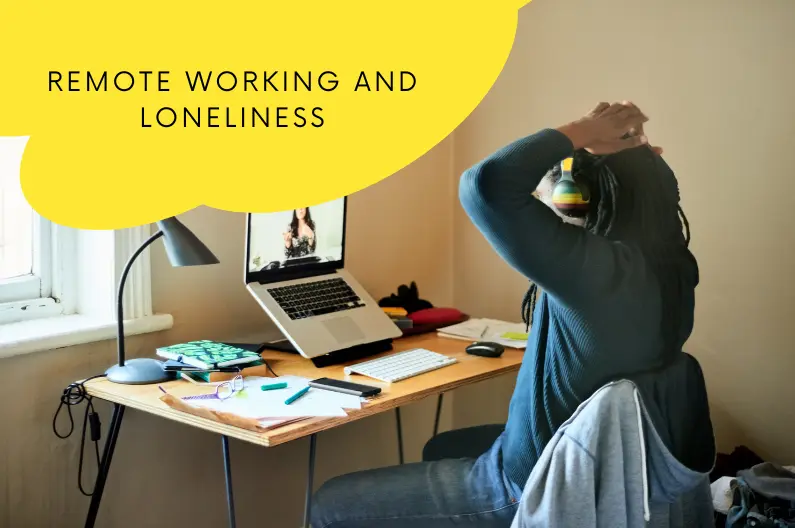
While remote working offers flexibility and autonomy, it generally also reduces spontaneous social interaction, informal support and a sense of belonging. There is no water cooler to stop at, or a communal kitchen to bump into your colleagues in when you’re making coffee. Without intentional efforts to build connection, loneliness in remote teams can develop quietly and affect both employee well-being and organisational performance. Let’s take a look at some of the stats. The link between remote working and loneliness comes down to what’s quietly missing from the day.
- 23% of remote workers cite loneliness as a top work-related struggle.
- 25% of fully remote employees experience daily loneliness, vs. 16% of on-site workers.
- $154bn is the estimated annual cost to employers from loneliness-related absence and lost productivity.
These figures sit alongside the wider picture in our UK workplace happiness statistics, which show just how much connection shapes how people feel at work. Fully remote employers are more likely to feel lonely daily than those working on-site. Hybrid workers fall in between – flexibility alone does not solve the connection problem.
“Our findings demonstrate that frequent remote work (3 or more days per week) is associated with increased odds of experiencing greater loneliness severity compared to never working remotely. In contrast, low-frequency remote work (1–2 days per week) showed no association with loneliness, suggesting this arrangement may offer an optimal balance between flexibility and social connection.”
(Remote work and loneliness: Evidence from a nationally representative sample of employed U.S. adults. J Affect Disord.)
But what does this look like in practice?
The Hidden Cost of Disconnection: Loneliness and Isolation in Distributed Teams
When teams are dispersed geographically, you might assume that productivity tools can replace the human connections that naturally occur in real-life shared workplaces. With advanced communication and project management software available to teams, employers sometimes assume that that’s sufficient for team building.
That’s not quite it, I’m afraid. Loneliness and isolation are significant risks in distributed teams, and they affect well-being and performance. Employees who feel disconnected from colleagues are more likely to experience stress, disengagement, and burnout, and organisations themselves may see reduced collaboration, creativity, and retention. And to top it all off, the challenge is often invisible. Someone can appear highly productive on paper while quietly feeling detached from the team around them. Building meaningful connections within your team isn’t just a simple wellbeing initiative; it’s a business imperative that directly influences engagement, resilience, and organisational success.
Psychological Safety in Remote Teams
Psychological safety is the belief that it is safe to speak up, ask questions, share ideas and make mistakes without fear of embarrassment or negative consequences. In remote environments, this can be a lot trickier to establish.
Many of the cues that build trust are absent. A team member who consistently leaves their microphone on mute, avoids contributing in meetings, or rarely participates in discussions may not actually be disengaged – instead, they might not feel safe or confident enough to contribute.
Remote work changes the conditions under which people need to speak up, which means leaders need to be more intentional about creating inclusive conversations, encouraging participation, and ensuring that every voice has an opportunity to be heard.
Onboarding: Where Connection Is Won or Lost
The first few weeks of employment set the stage. They often determine how connected and supported someone feels within an organisation. You only get one chance to make a first impression!
In remote and hybrid environments, poor onboarding can leave new starters isolated, unsure where to turn for help and disconnected from the wider team. These early experiences can create silos that persist for months or even years, limiting collaboration and slowing integration.
Effective remote onboarding goes beyond systems access and training schedules; it intentionally creates opportunities for relationship-building, introduces cultural norms, establishes support networks and helps new employees understand how they fit into the organisation. When connection is prioritised from day one, employees are far more likely to engage, contribute and thrive.
How can you reduce loneliness in remote and hybrid teams?
Tackling remote working and loneliness doesn’t require a huge budget – organisations can start with a few practical steps.
Audit connection levels across the organisation
The first is to audit connection levels across the organisation. Many businesses track engagement, performance and productivity, but far fewer actively measure whether people feel connected to their colleagues and the wider organisation. This can be done through employee surveys, focus groups, one-to-one wellbeing conversations or pulse checks that explore feelings of belonging, inclusion and support. Questions such as “Do you feel connected to your team?”, “Do you have someone you can turn to for support at work?” and “Do you feel included in conversations and decision-making?” can provide valuable insights into where connection is thriving and where it may be lacking.
Identify areas of risk
The second step is to identify areas of risk. Loneliness and isolation do not affect everyone equally, and certain groups may be more vulnerable than others. New starters, remote-only employees, part-time workers, lone workers and individuals in highly independent roles can all be at greater risk of feeling disconnected. Organisations should also pay attention to warning signs within their data, such as increased absence rates, higher staff turnover, reduced participation in meetings, lower engagement scores or a decline in collaboration between teams. These indicators can help leaders spot potential problems before they affect well-being, performance, and retention.
Embed connection into your wellbeing strategy
Finally, connection should be embedded into the organisation’s wider wellbeing strategy rather than treated as a separate initiative. Just as organisations invest in physical and mental health support, they should also consider how they are supporting social wellbeing and meaningful workplace relationships. This might include training managers to recognise signs of isolation, building regular opportunities for informal interaction into the working week, creating peer support networks, improving remote onboarding processes or reviewing policies that may unintentionally limit opportunities for connection. Importantly, connection should become something that is measured, discussed and actively prioritised, rather than being left to chance.
When organisations take connection seriously, the benefits extend far beyond reducing loneliness. Employees who feel connected are more likely to be engaged, collaborative, innovative and resilient. They are also more likely to remain with the organisation and contribute positively to its culture. By treating connection as a strategic driver of wellbeing rather than an optional extra, organisations can create healthier, more inclusive and more productive workplaces where people feel supported, valued and able to do their best work.
Three things you can start setting in motion right now
THIS WEEK
Audit your connection points
Map out where your remote team members actually interact with each other – formally and informally. If the list is short, that’s the problem to solve.
Action: Count those touchpoints and identify the gaps.
This month: Identify your isolation risk
Look at your team structure and flag anyone who may be particularly at risk, including new starters, part-time remote workers, and those in roles with limited cross-team contact.
Action: Reach out to your highest-risk people. Ask how connected they feel and what ideas they have to change that.
THIS QUARTER
Add connection to your wellbeing strategy
If your current wellbeing provision doesn’t explicitly address loneliness or social isolation, build it in – whether that’s reviewing your hybrid policy, adding structured informal touchpoints, or simply making it a standing agenda item.
Action: Update your policies and work with your team to gather ideas that suit them.
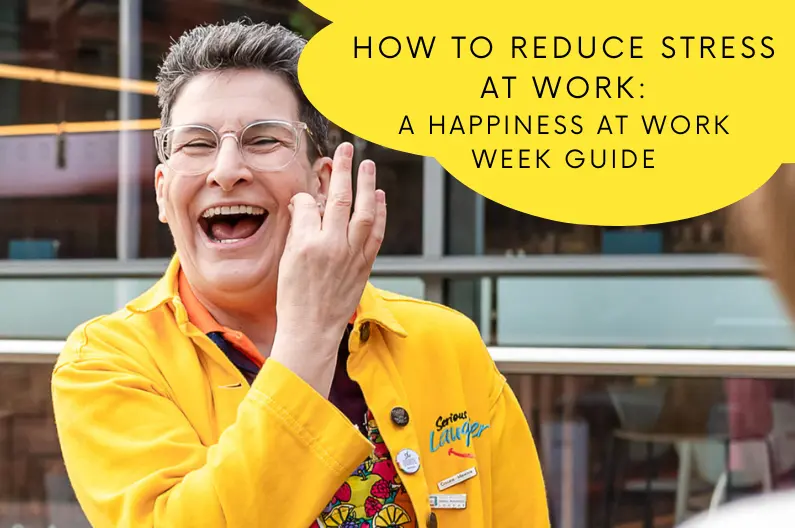
My protip: Introduce a specific intervention that you could run on Monday morning to kick off the week with connection. Shared laughter is a great way to do this, and there are plenty of quick, easy tutorials online (do consult my website and YouTube channel to find mine!).

Why does this matter for your team?
Loneliness can have serious effects on your team members’ mental health, as well as their productivity and contributions to the workplace. It’s not only about spotting the signs – it’s about setting up frameworks that inspire and facilitate connection. This is where workplace loneliness becomes a leadership issue rather than an individual one: when employers make the conscious effort to build systems that promote connection and combat isolation, they have far less work to do down the line. Getting ahead of remote working and loneliness now saves far more work later.
Similarly, giving your teams tools they can use not only to connect with each other, but to improve their mental health in a tangible way is really important. It can change everything. Laughter Yoga is a great one to think about here!
If you want to work with the Serious Wellbeing team, take a look at the way we can support you with corporate events. If you recognise how important the mental health and wellbeing of your team is, but don’t know where to start improving it, we’re your answer.
Frequently Asked Questions
Is remote working bad for mental health?
Not in itself. Remote working brings real benefits such as flexibility and autonomy, and many people thrive on it. The risk is that it reduces the informal, spontaneous contact that builds belonging, so loneliness can creep in unnoticed. The research suggests working remotely one or two days a week strikes a healthy balance, while three or more days a week is linked to greater loneliness. With intentional effort to build connection, remote and hybrid teams can stay both happy and healthy.
How do I know if someone on my team is feeling lonely?
It isn’t always obvious, which is part of the challenge. Someone can look highly productive while feeling quite detached. Watch for quieter signs such as withdrawing from meetings, staying on mute, contributing less in group chats, or pulling back from optional social moments. Changes in absence, engagement or collaboration can also be clues. The simplest approach is to ask directly and kindly in one-to-one conversations how connected someone feels.
What can managers do to reduce loneliness in remote teams?
Start by measuring connection, not just performance. Build regular informal touchpoints into the week, pay close attention to onboarding, create peer support networks, and make sure quieter voices have room to contribute. Above all, treat connection as part of your wellbeing strategy rather than leaving it to chance.
How does Laughter Yoga help with workplace loneliness?
Laughter Yoga is a shared, playful experience that brings people together quickly, with no need for jokes or comedy. You don’t need to feel happy to take part. The exercises use simulated laughter, which gives the body the same benefits as the real thing and very often tips over into genuine laughter. For remote teams, a facilitated online session is a simple, evidence-based way to create a moment of real connection and lift the mood for the week ahead.
Sources
Buffer, Gallup, Cigna
Figueiredo E, Margaça C, Sánchez-García JC. Loneliness and Isolation in the Era of Telework: A Comprehensive Review of Challenges for Organizational Success. Healthcare (Basel). 2025 Aug 8;13(16):1943. doi: 10.3390/healthcare13161943. PMID: 40868559; PMCID: PMC12385570.
He T, Wei L, Goodman MS, Pagán JA, Cuevas AG, Bather JR. Remote work and loneliness: Evidence from a nationally representative sample of employed U.S. adults. J Affect Disord. 2026 Jan 15;393(Pt B):120456. doi: 10.1016/j.jad.2025.120456. Epub 2025 Oct 13. PMID: 41093174.
Work with the Serious Wellbeing Team
If loneliness or disconnection is showing up in your remote or hybrid team, a facilitated laughter session is a simple, evidence-based place to start. Serious Laughter delivers conference icebreakers, talks, wellness workshops and Laughter Yoga sessions to businesses, mental health organisations and community groups, in person and online, across Manchester, Cheshire, Yorkshire, Leeds, London and the wider UK.
You can find out more on our Team-Building Workshops page, or download our services pack to share with your team.
Get in touch: happy@seriouslaughter.co.uk or WhatsApp +44 7974 778091.
Sunny Turner | Founder, Serious Laughter | FHT-Accredited Laughter Yoga Teacher | Museum of Happiness Facilitator | Comedy on Prescription Certified Facilitator

Sign Up
Receive wellness tips & uplifting videos from Serious Laughter.