5 Small Actions Your Team Can Take This Mental Health Awareness Week

By Sunny Turner
5 Small Actions Your Team Can Take This Mental Health Awareness Week
5 Small Actions Your Team Can Take This Mental Health Awareness Week
Mental Health Awareness Week is here – and this year, the theme is Action.
Not more talking about it. Not another awareness poster in the staff kitchen. Action.
That’s a shift worth paying attention to. Because for a lot of people, and a lot of teams, the gap between knowing mental health matters and actually doing something about it has been wide for a long time.
The good news is that the actions don’t need to be big. Research consistently shows that small, regular, intentional habits have a more lasting impact on mental well-being than grand gestures. What follows are five things that are easy to start this week – for your team during working hours, and for yourself once the day is done.
1. Make Gratitude a Team Habit
Gratitude is one of the most well-researched wellbeing practices. Practising three things you’re grateful for each day – and particularly finding something positive within a difficult situation – has been shown to reduce symptoms of depression and anxiety over time.
At work: Start your next team meeting with one minute of gratitude. Ask everyone to share one thing that went well this week, however small. It shifts the tone of the room before a single agenda item has been discussed. Some teams do this in a shared document or a Slack channel – a running list that anyone can add to. Over time, it changes the lens through which people see their working week. You could also suggest bringing in a treasured item and storytell with it.
At home: Keep a small notebook by your bed. Before you sleep, write down three things from the day that were good – not big, not perfect, just good. On difficult days, this practice matters most.
2. Prioritise Time With People Who Lift You
Daily contact with positive people is one of the simplest and most evidence-supported things any of us can do for our mental health. Social connection isn’t a nice-to-have. It’s a genuine protective factor against anxiety and low mood – and if workplace stress is already affecting your team, this one is worth prioritising first.
At work: This doesn’t mean forcing social time that people don’t want. It means being intentional about who you spend time with during the working day. A five-minute check-in with a colleague who energises you. Lunch away from your screen with someone you enjoy. Protecting time with the people in your team who make the work feel worth doing.
At home: Think about who in your life makes you feel better after you’ve spent time with them. Plan to see or speak to that person this week. Not when you get around to it – this week, as a deliberate act.
3. Disconnect From Technology and Get Outside
The mental health impact of constant connectivity is well-documented. Endless scrolling keeps the nervous system in a low-level state of alert, disrupts sleep, and makes it harder for the mind to rest and recover. Nature, by contrast, has a measurable calming effect on the brain.
At work: Encourage your team to take proper breaks away from screens. A ten-minute walk outside at lunchtime isn’t unproductive – it reduces stress hormones, improves focus, and increases energy for the afternoon ahead. Some organisations are now building walking meetings into their culture. It’s worth trying.
At home: Set a technology boundary for the evening. A specific time after which you put the phone down – not in another room to check five minutes later, but genuinely down. Use the time to walk, cook, read, or simply sit in a quiet place. The nervous system needs this more than most people allow it.
4. Do One Random Act of Kindness
This one is simple, costs nothing, and works. Doing something kind for another person activates the same reward pathways in the brain as receiving kindness. It reduces cortisol, increases oxytocin, and has been shown to improve mood and sense of purpose – particularly in people who are struggling.
At work: It doesn’t need to be elaborate. Write a brief, specific message to a colleague to say what you appreciate about them. Make someone a cup of tea when they look like they need one. Cover a small task for someone who’s overwhelmed. Kindness in a team is contagious in the best possible way, and it costs nothing to start.
At home: Think about someone in your community who might benefit from a small act of kindness this week. A neighbour, a friend, a stranger. The act itself matters less than the intention behind it.
5. Schedule Some Time to Laugh, Sing, or Dance
This one’s the most underestimated on the list – and the evidence behind it is stronger than most people realise.
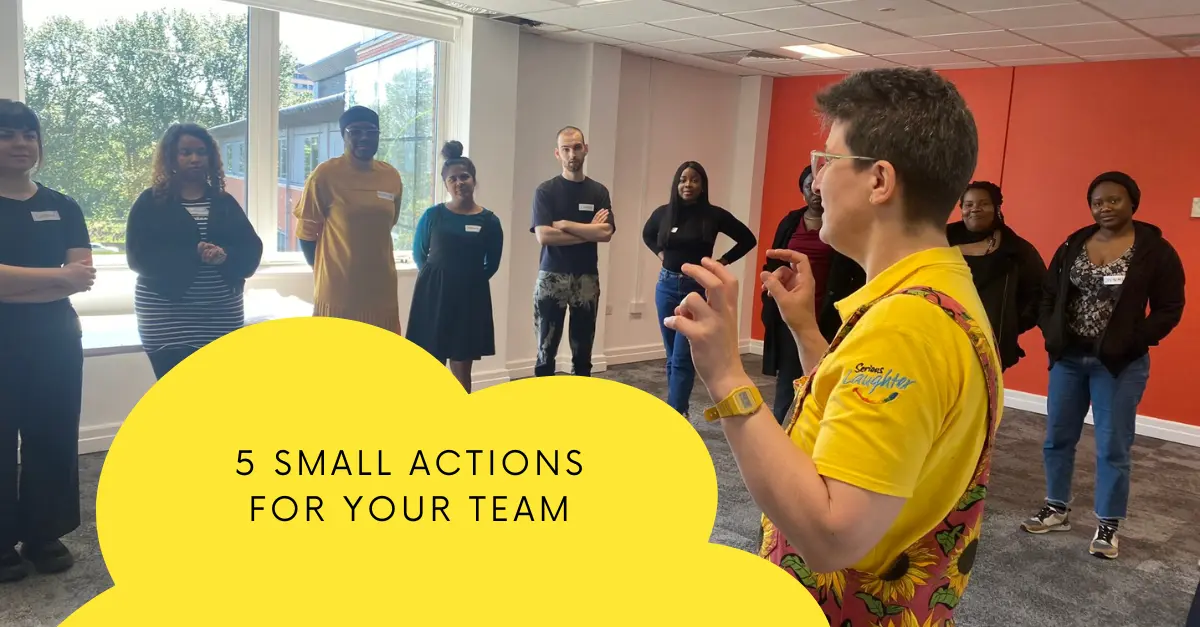
At work: Find 15 to 30 minutes this week for something that makes your team laugh together. Laughter Yoga combines simulated laughter exercises with breathing techniques, and you don’t need to be happy, funny, or in a good mood to take part. A randomised controlled trial found that anxiety, stress, burnout, and depression all decreased following Laughter Yoga, with measurable reductions in cortisol. A further study of a workforce under significant pressure found that a laughter programme reduced cortisol levels and increased happiness, even among those working under considerable strain. One session is enough to feel the difference. Try some of these exercises together.
At home: Put something in your diary this week that makes you laugh. A favourite programme, a playlist you can’t help dancing to, a voice note to a friend who always makes things funnier. It sounds obvious. Most people aren’t doing it deliberately. It makes a real difference when they do. Happy Radio UK is a station I recommend to my clients.

Taking Action
None of these actions needs a budget or a policy. They just need someone like you to start.
If you’re curious about what Laughter Yoga could look like for your team – whether that’s a one-off wellbeing session, a conference icebreaker, or something more regular – take a look at my services pack or get in touch at happy@seriouslaughter.co.uk
Which of these five actions do you think your team would find easiest to start with this week?
About the writer: Sunny Turner is the founder of Serious Laughter, an FHT-Accredited Laughter Yoga Teacher, Museum of Happiness Facilitator, and Comedy on Prescription Certified Facilitator based in Manchester. Serious Laughter delivers evidence-based laughter sessions to corporate teams, NHS organisations, schools, charities, and community groups across the UK, in person and online. Every corporate booking funds free community session spaces.

Sign Up
Receive wellness tips & uplifting videos from Serious Laughter.